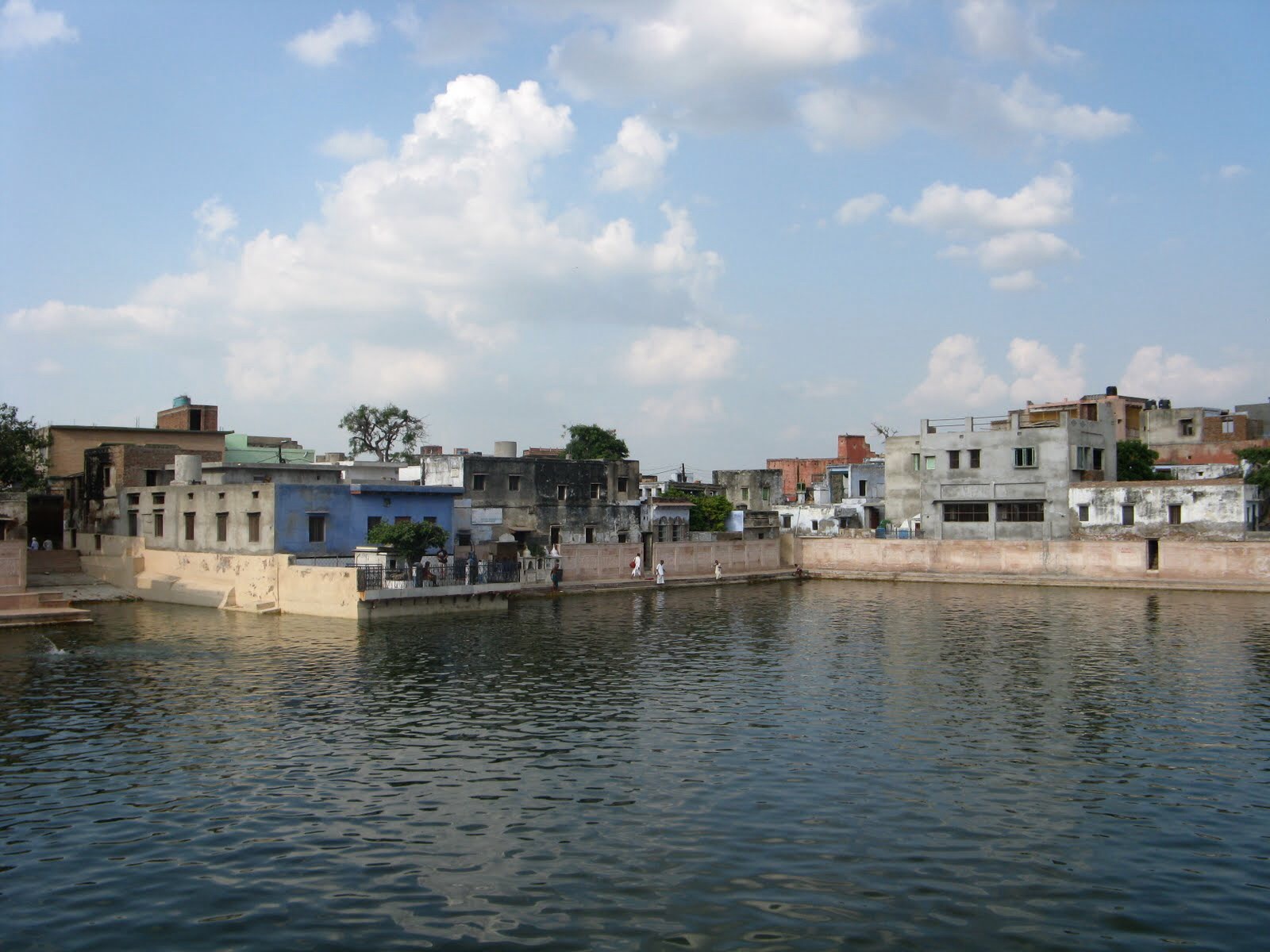
āra ujjvala madhura ye rasa varṇa viparyaya kori; bhakte sukha dite rahasya sahite āche sara nāma dhari e kāraṇa bhakta sara kori vyakta se rase koriyā snāna; kṛṣṇera kṛpāya rādhā sama prema lābha kore bhāgyavān śrī Kṛṣṇa yokhon rādhā daraśana lāgi utkaṇṭhita hoy; sakala upāya viphala hoiyā rādhākuṇḍāśraya loy tat kāle rādhāra pāya daraśana emati kuṇḍa prabhāva; rādhāra-o temati śyāmakuṇḍāśraye Kṛṣṇa saṅga hoy lābha
“The syllables ra-sa stand for the sweet splendid love of the Divine Couple Rādhā and Kṛṣṇa, and when these syllables are reversed we get the word sa-ra, or lake. This secret makes the devotees very happy.Therefore the devotees reveal that sara (lake) by bathing in that rasa, and by Kṛṣṇa’s grace they become blessed by attaining a love for Kṛṣṇa that is equal to that of Śrī Rādhā’s. When Kṛṣṇa becomes eager to see Rādhā, and all His endeavours fail, He takes shelter of Rādhākuṇḍa. At that moment He gets the audience of Rādhā on the strength of the kuṇḍa. In the same way Rādhā also takes shelter of Śyāmakuṇḍa and thus attains the company of Śrī Kṛṣṇa.”
Amazing lotus flowers, lilies and Kahlāra-flowers are covering the sweet water of the kuṇḍa, surrounded by buzzing bees that become intoxicated by their fragrance. The chest (surface) of the kuṇḍa also bears many beautiful lordly swans and cranes that sing beautiful songs. When Kṛṣṇa sees this Rādhākuṇḍa He remembers Śrī Rādhikā and when Śrī Rādhikā sees Śyāmakuṇḍa She similarly remembers Kṛṣṇa. The kuṇḍa is related to Śrī Rādhā in all respects, and while Raghunātha describes the way he sees the kuṇḍa he simultaneously describes the self-manifest pastimes that take place there. At noontime Śrīla Raghunātha Dāsa Gosvāmī anxiously cries out of grief, sitting on the bank of Rādhākuṇḍa, as he suddenly perceives one very sweet pastime: He sees Rādhā and Kṛṣṇa playing in the water. The loser of this water-splashing game must give a prize to the winner. Kundalatā is the referee and the prize is nectar from the lips (kisses) of the loser. Rādhikā first splashes Kṛṣṇa. How beautiful Her eyes are!
taṁ siṣeca kara-paṅkaja koṣaiḥ sāmbubhiḥ samaṇi kaṅkaṇa ghoṣaiḥ vāruṇāstram eva tat kusumeṣor atyasahyam abhavad vijigīṣoḥ śaślathe bhagavatī vanamālā hāra yaṣṭir apatat suviśālā eka eva balavān priya dehe kaustubhaḥ paribhavaṁ na viṣehe
(Kṛṣṇāhnika Kaumudī 4/146, 149)
“How sweetly Her jewelled bangles jingle around Her lotuswhorl-like hands! It is as if Cupid wants to defeat Kṛṣṇa with His watermissile! It’s become intolerable for Kṛṣṇa! His garland of divine forest flowers loosens, His big pearl necklace falls off and His stick falls out of His hand; only His powerful Kaustubha-gem is able to tolerate this stream of water without lamenting!” Īśvarī thinks tender Śyāmasundara will suffer too much if She splashes in His eyes, so She doesn’t do that, but cruel Śyāma, desiring victory, does splash Sukumārī’s (tender Rādhikā’s) eyes all too hard, saying: “Priye! See if You can tolerate this!”
sahyatām ayam ayaṁ mama pāthaḥ seka ity atha nigadya sa nāthaḥ preyasī vadana eva saharṣaḥ sasmitaṁ sarasam ambu vavarṣaḥ
(Kṛṣṇāhnika Kaumudī 4,150)
Tulasī watches on the bank of the kuṇḍa how Rādhā and Śyāma have a huge fight in the water. The sakhīs rebuke Śyāma, saying: “Śyāma! Don’t splash our sakhī like that! Has She ever done that with You? Just see how much She suffers!”, but Śyāma does not listen. Svāminī becomes mad from His splashing, although She is normally so grave, and She backs away. What can a sukumārī (tender girl) do against such a powerful wrestler?
Śrī Līlāśuka (Bilvamaṅgala Ṭhākura) calls Kṛṣṇa ānanda (ecstasy), and on the mouth of that ānanda a śṛṅgāra-rasa (erotic flavour) smile blooms up. He does not play any other games than the games of śṛṅgāra rasa. Rasamaya Kṛṣṇa and Rasamayī Rādhā shower Each other with nothing else but rasa during Their rasa-krīḍā (delectable games), and the devotees that are fixed in smaraṇa are constantly showered with the sweet relish of this rasa-krīḍā.
These pastimes can only be attended in svarūpāveśa. When the mind returns to the external world this svarūpāveśa disappears, therefore Śrīla Narottama dāsa Ṭhākura sings: sādhana smaraṇa līlā, ihāte nā koro helā, kāya mane koriyā susāra “Do not neglect the practice of līlā smaraṇa; make it the essence of everything for your body and mind!” It is the nature of these transcendental pastimes to draw the mind towards one’s siddha svarūpa. That sacred greed that is the only and essential requirement for entering into rāgānugā bhakti is also awakening the revelation of these transcendental pastimes. When a fortunate devotee hears about the sweetness of these feelings this sacred greed awakens in his heart.
tat tad bhāvādi mādhurye śrute dhīr yad apekṣate nātra śāstraṁ na yuktiṁ ca tal lobhotpatti lakṣaṇam
“The definition of the birth of transcendental greed is that when one hears about the sweetness of the moods and pastimes of Kṛṣṇa and His Vraja-devotees one becomes attracted up to the point that one is not sensitive to the instruction of the revealed scriptures anymore, nor to logical arguments.”
(Bhakti Rasāmṛta Sindhu 1.2.292)
Experience will come automatically while hearing about these sweet moods. These topics while destroy bodily consciousness and will nourish the siddha svarūpa. One who becomes lusty after hearing these topics is unfortunate. Śrī Śuka Muni says: “The topics of Rādhā and Mādhava’s loving affairs will cure the heart’s disease of lust and will bless the hearer with the highest possible devotion to the Lord (which is undoubtedly mañjarī bhāva).”
(Srima Bhagavatam 10.33.40)
Commentary to Vilapa Kusumanjali, verse 15

 Amrita-Tarangini